Shiba AI Members Alice and Ujwal Secure 3rd Place at Tokyo AI x OpenAI Hackathon
We are incredibly proud to announce that Shiba AI members Ujwal K and Alice Saito secured 3rd Place in the highly competitive B2B Solutions track at the Build with OpenAI x Tokyo AI (TAI) hackathon.
The intensive sprint session brought together 50 of Tokyo's top technical creators, developers, and engineers for an evening of rapid prototyping using OpenAI's latest APIs, core infrastructure models, and Codex environments.
The Technical Challenge: Disaster Surge Dispatching
Competing in the B2B Solutions track, teams were tasked with building AI-native tools designed to streamline high-stakes organizational operations or legacy system workflows.
Ujwal and Alice developed Tsunagu, an AI-powered emergency dispatch optimization system. During disaster-scale crisis surges, local emergency networks are frequently overwhelmed by hundreds of simultaneous phone calls. In these high-volume saturation events, dispatcher bandwidth becomes a critical bottleneck, and life-threatening, time-sensitive calls risk being buried under less critical alerts.
Tsunagu utilizes custom LLM orchestrators and speech-to-text pipelines to parse real-time incoming distress data, flagging critical life safety anomalies and surface-level emergency indicators instantly. By mapping problem significance directly against dispatcher queues, the system highlights high-priority calls in real time, ensuring emergency teams can coordinate rapidly when seconds matter most.
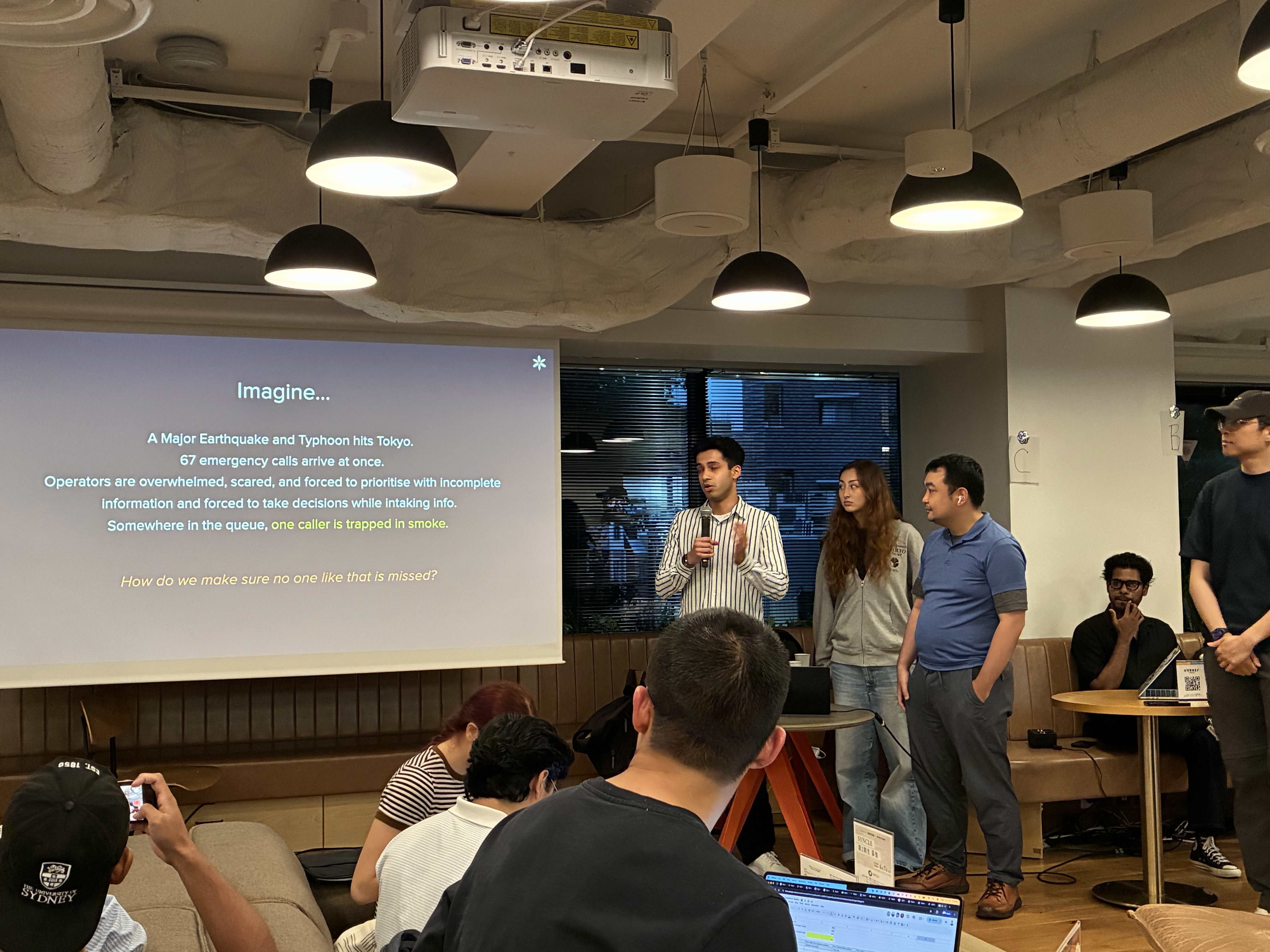 Figure 1: Ujwal Kumar, Alice Saito and team members presenting their project at the Open AI Hackathon
Prototyping Under Constraint
The hackathon enforced a strict 150-minute development window, requiring teams to aggressively strip away edge cases and focus purely on core algorithmic implementation. Projects were evaluated heavily on four core vectors: Problem Significance (30%), Creative Tool Execution (30%), Demo Quality (30%), and Future Scalability (10%).
Leveraging advanced code generation pipelines and custom workflows, the Shiba AI team successfully demonstrated an end-to-end simulation of a dispatcher console handling severe influxes. The technical pitch successfully showcased the structural logic of how the underlying model handles real-time contextual evaluation under stress, earning the team a $5,000 prize in OpenAI deployment credits.
Ecosystem Support and Community Networking
The event featured hands-on technical support and live implementation guidance from deployment and developer experience engineers from OpenAI's international teams, who offered guidance on orchestrating long-horizon AI agents securely.
Following the project showcases and rigorous evaluation loop, the energy carried over into an evening mixer. Over food and refreshments, members of the Shiba AI spent the night connecting with fellow builders from Tokyo AI (TAI), DEEPCORE, and Foundry Labs K.K., discussing local deployment compliance standards, enterprise system integrations, and the broader safety landscape of autonomous software systems.
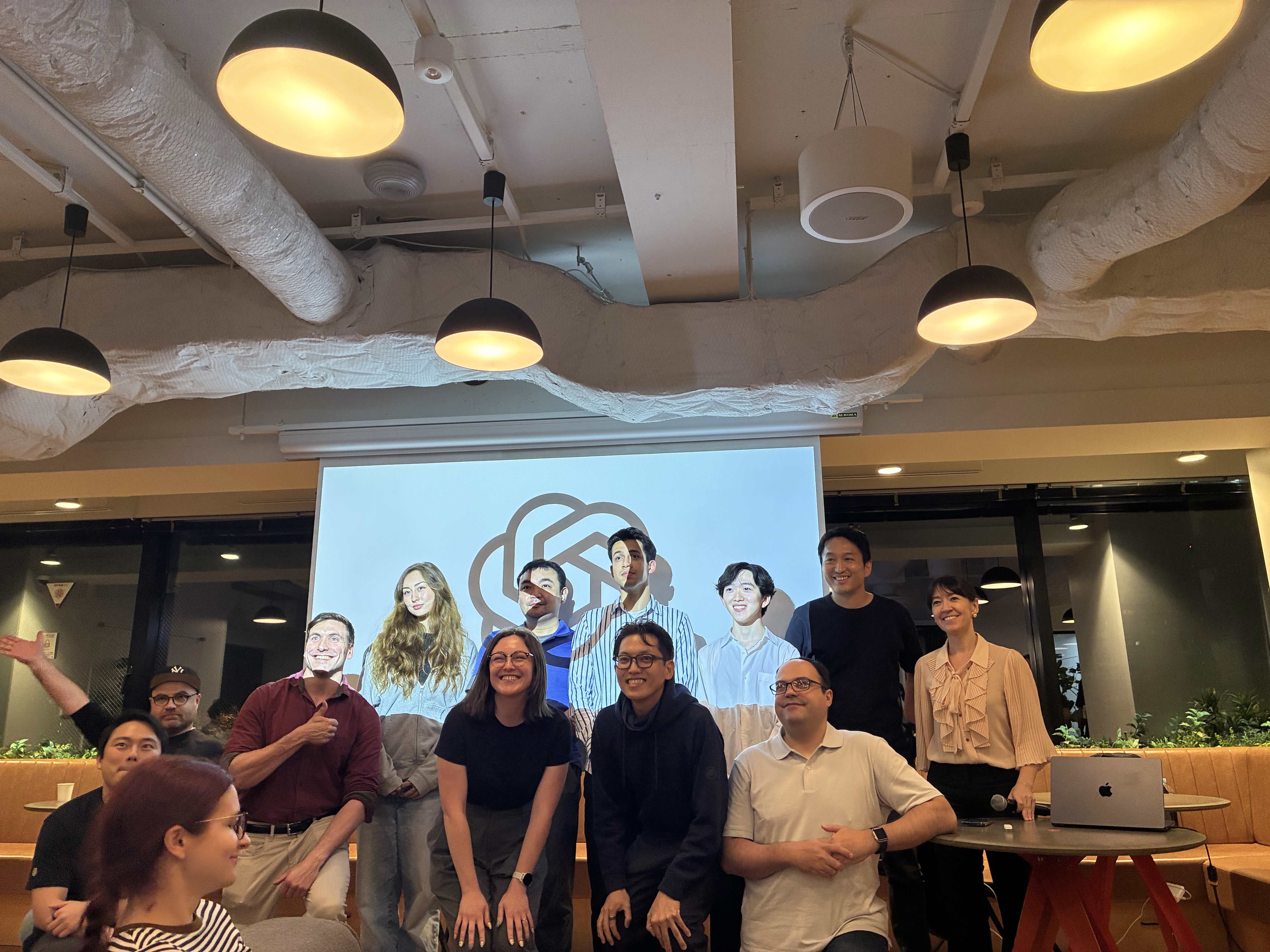 Figure 2: Event participants, and members of the Tokyo AI community gathering after the closing awards ceremony
We want to extend a massive congratulations to Ujwal and Alice for their incredible technical showing, and our sincere thanks to Tokyo AI and OpenAI for organizing a phenomenal event for the ecosystem!
If you are interested in collaborating on our disaster preparedness frameworks or joining our upcoming technical sprints, explore our research or visit the Shiba AI Contact Page.